Start here
Travesty revue: worth it?
Whether Dresden’s travesty revue earns an evening when your German is thin: the two hours, the costumes, food at the tables, the age rule and the dates.
Check for a revue night ↗Quick answer
Yes, if you go for the spectacle. The revue is about two hours of costume numbers, star parodies, music and comedy in a Neustadt theatre where the audience sits at tables. The compère and the jokes are in German, so without the language you follow the costumes, music and parodies but lose much of the wordplay. Food and drinks are extra, the after-show party is included, the ticket is for ages 14 and up, and it cancels free until two days before.
In the ticket, or not
| This ticket | |
|---|---|
| Entry to the revue | Included |
| After-show party | Included |
| Food and drinks | Extra, at your table |
| Language of the comedy | German |
| Minimum age | 14 |
| Cameras | Not allowed |
| Free cancellation | Up to 2 days before |
The verdict first

Book it if a night of transformation and glamour appeals more than a night of punchlines, and if you can enjoy a room laughing at jokes you only half catch. A travesty revue pleases the eye first: the costume changes, the feathers and rhinestones, the moment a performer becomes a famous star for one song and then turns the impression inside out. Skip it if the comedy is the whole point for you and you have no German, or if you want a set dinner included in the price; neither is what this ticket sells. Everyone else should treat a free date as a small piece of luck and take it.
What happens in the two hours
The evening is a revue in the old sense of the word: a string of numbers tied together by a theme rather than a plot. Expect costume parades, songs, star parodies and stretches of comedy from a compère who works the room and draws the audience in. German Wikipedia describes the travesty artist’s repertoire as running from imitating stars, through parodying them, to characters the artists invent, with music and singing often at the centre and plenty of innuendo. The theatre changes its revue from time to time, so nobody can promise you a particular number or impression, and this guide does not try to.
If your German is thin
This is the question that matters most for visitors from abroad. The compère speaks German, and the comedy leans on wordplay, which is the part of any show that travels worst. What travels well is everything else: the costumes, the music, the physical comedy and the parodies, which work through gesture, timing and the voice of a star you already know. A little German goes a long way, because you catch the set-up and the room supplies the rest. With none, expect to laugh at the delivery more than at the lines. In a mixed group, sit the best German speaker where they can whisper the gist.
Costume is the main language

The theatre’s own billing for its costumes is extravagant: rhinestones by the million, mountains of feathers and sequins by the ton. Read that as showbusiness rather than an inventory, but the point stands, because the costumes are what visitors without German carry home. The habit is older than travesty. Revues of the early 20th century were famous above all for visual spectacle, and the showgirl shows of Paris and later Las Vegas grew ever more lavish as venues competed. A travesty revue takes that scale and adds a second layer of performance: a performer in a full gown, playing a woman, playing a star.
Tables, food and drink
You sit at tables rather than in rows, cabaret style, and the theatre’s kitchen and bar serve them. Food is ordered at your seat before the show, either à la carte or as one of the set menus, and paid for at the theatre; drinks work the same way. Nothing to eat or drink is in the ticket. One practical catch: the voucher admits you from 30 minutes before the start, while the theatre asks diners to arrive well before that. If dinner at the table matters to you, contact the theatre after booking to agree a time, or eat in the Neustadt first and order only drinks.
Dates, and the two-day rule
Dates for this ticket appear on the booking page only now and then, and many weeks show nothing at all. That is the real scarcity here, so if a date fits your trip, book it rather than waiting for a better one. The cancellation terms make that easy: a GetYourGuide booking can be cancelled at no cost until two days ahead, with the money returned in full. Inside those two days it cannot, which is stricter than the 24 hours on the other Dresden trips on this site, so put the cut-off in your calendar. The theatre also sells tickets itself, at its box office and online.
On the night: voucher, desk, seats
Arrive up to half an hour before the start and go to the ticket desk at the entrance, where the voucher on your phone is exchanged for a ticket. Nothing needs printing, but leave time for the exchange rather than arriving at the last minute. Coats go to the cloakroom by the door. The theatre does not take bookings for particular seats; it seats each party together, at one table or at neighbouring ones. No cameras are permitted while the revue is on, so the phone goes away once the voucher has been shown. After the final number the after-show party begins in the bar, and it is part of the ticket.
The after-show party
The ticket includes the after-show party, and it is worth staying for. The theatre’s lounge bar opens only after its travesty shows, and the theatre describes the idea simply: the artists leave the stage and spend the rest of the evening with the audience in the bar, with guest performers adding live entertainment. Drinks are paid for as you go. For visitors without German this can be the friendliest part of the night, because conversation at a bar is easier than wordplay from a stage, and you may get the chance to tell a performer how much a costume impressed you.
Who this isn’t for
Children, first: the ticket is not suitable for anyone under 14, and the humour is adult and often risqué. It also suits nobody who wants the comedy above all and has no German, since you would be watching a joke-led show from outside the joke. Look elsewhere if you want a meal in the price, a programme you can read in advance, or a numbered seat. If political satire is what you are after, the German word you need is Kabarett, a different stage tradition altogether. And anyone who measures a night out in photographs will be frustrated, because cameras stay off.
The theatre behind the revue
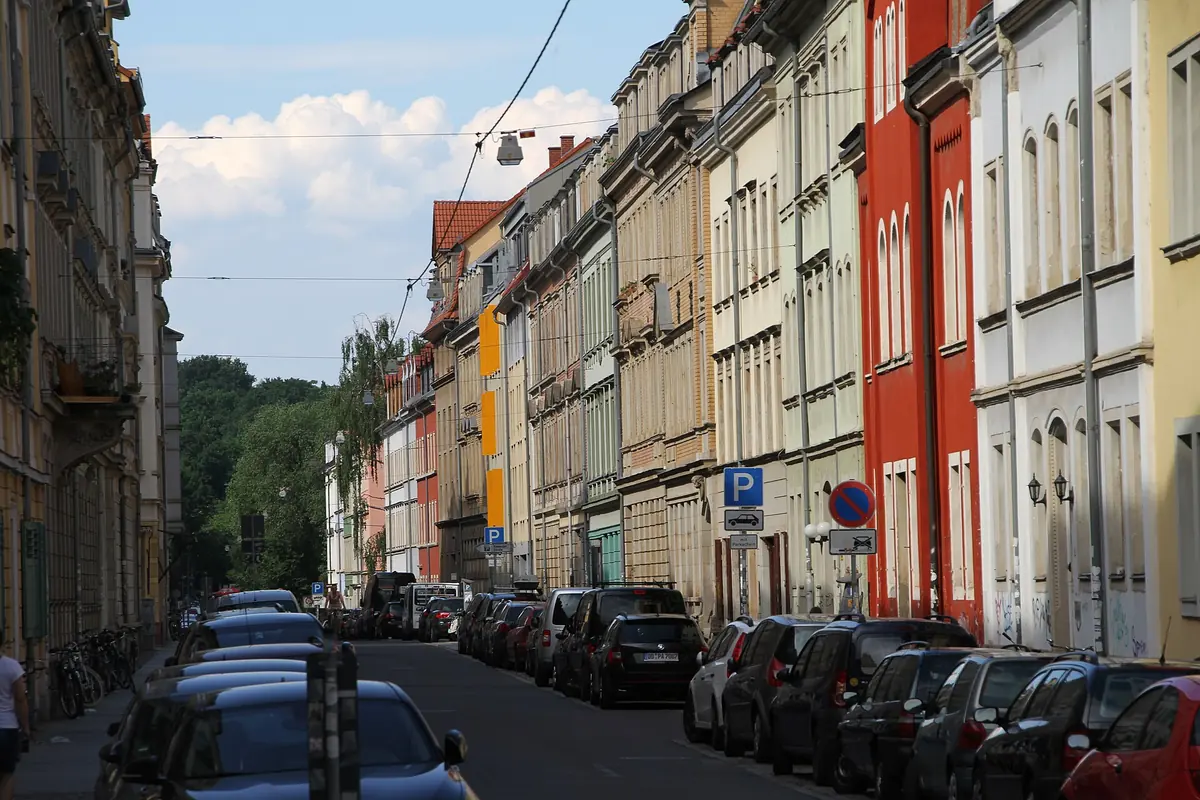
The venue bills itself as the largest travesty theatre in Europe; treat that as its own claim. Its history page tells a story of persistence. The ensemble moved to Prießnitzstraße in the Äußere Neustadt in 2003, a new theatre was built on the site ten years later, and in June 2013 the little Prießnitz river burst its banks and destroyed the auditorium. After two years of rebuilding, the theatre reopened in 2015. The house also turns up in the German reference article on Travestie, listed among the country’s best-known travesty stages beside houses in Hamburg, Berlin, Herten and Cologne.
Making a night of it
The theatre sits in the Äußere Neustadt, a quarter known for one of the liveliest bar scenes in Germany, so the easy plan is to come early, eat at the table or nearby, and stay on for the after-show bar. If you have several evenings in the city, the alternative this site weighs against the revue is the night-watchman walk through the old town, a German-language evening of a very different kind; the next guide compares the two. By day, the Zwinger’s museums and a river cruise on the Elbe fit around either.
Read next: Revue or night watchman?
Frequently asked questions
Can I follow the show without German?
Mostly. Costumes, music and star parodies need no translation, but the compère and much of the comedy are in German, so you will miss a share of the jokes.
Does the ticket include a meal?
No. Food and drinks are served at the tables and paid for at the theatre. The ticket covers the revue and the after-show party.
Can I bring children?
No: the minimum age for this ticket is 14, and the humour is aimed at adults.
Until when can I cancel for free?
Until two days ahead of the show, with every cent returned, for bookings made through GetYourGuide. After that the booking stands.
Do I need to print the voucher?
No. Show it on your phone at the ticket desk by the entrance and exchange it for a ticket before the show starts.
Is the after-show party really part of the ticket?
Yes. The show and the after-show party are both included; drinks at the bar are paid for separately.
Sources
- The theatre’s history page (consulted November 2026)
- The theatre’s visitor FAQ: tickets, seating, food, travel and access (consulted November 2026)
- The theatre’s page on its after-show lounge (consulted November 2026)
- German Wikipedia, article on Travestie (consulted November 2026)
- English Wikipedia, article on Revue (consulted November 2026)
- English Wikipedia, article on Äußere Neustadt (consulted November 2026)